Flood Cleanup in Arizona
Rising water is treated as Category 3 from the moment it enters your home. We extract it safely, remove what it contaminated, sanitise what remains, and dry the structure with readings logged daily.
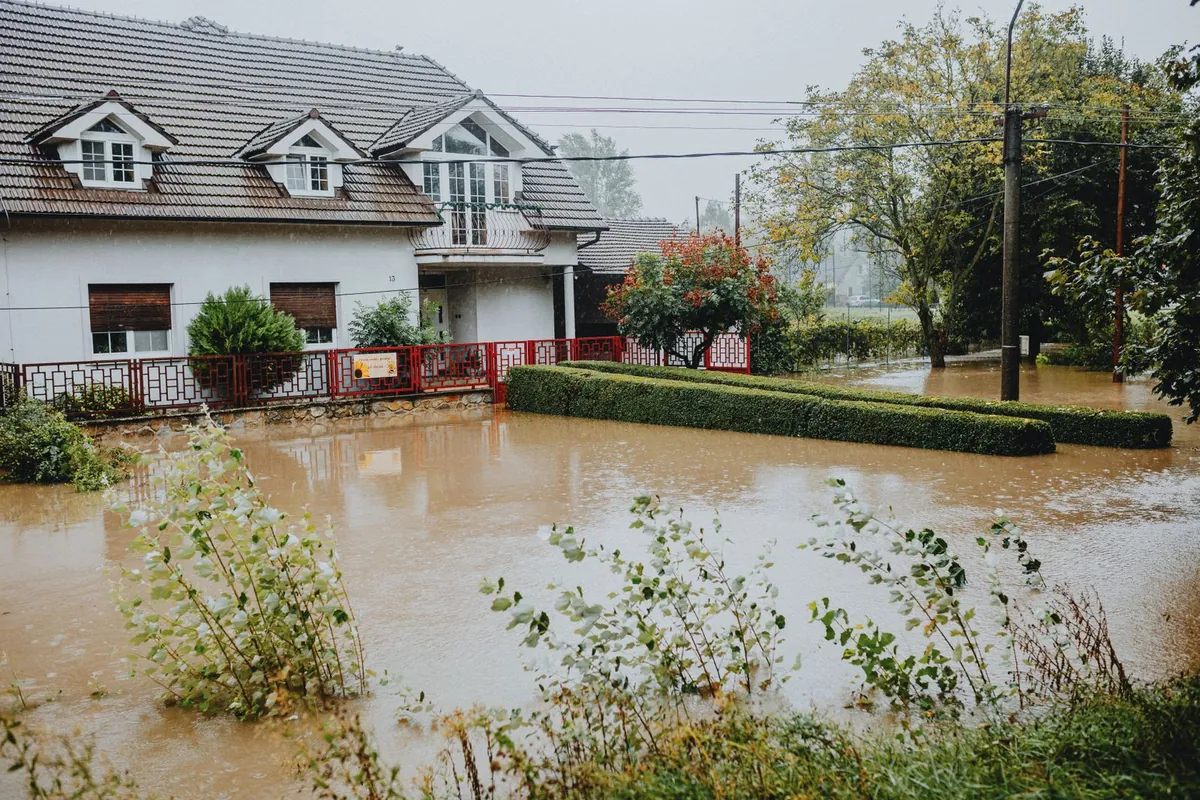
Illustrative photo — a home surrounded by floodwater after heavy rain, the usual source of rising-water losses.
- Measured dryingDaily moisture readings guide every drying decision.
- Written scope firstYou see the itemised scope before work begins.
- Photo recordsPhotos and logs from first visit to final walkthrough.
- Homes and businessesHouses, rentals, offices, shops and restaurants.
The short answer
Flood cleanup is the removal of rising or surface water and everything it carried into the home, handled as Category 3 black water under ANSI/IICRC S500. It includes extraction, removal of contaminated porous materials, cleaning and sanitation of remaining surfaces, and measured structural drying, all documented with photos, readings and a written scope for your insurer or flood policy.
Arizona flooding rarely looks like a river rising. It looks like a monsoon cell dropping intense rain faster than streets and washes can move it, water pooling against a home, finding the gap under a door or through a wall, and spreading silt and debris across floors.
The reason is what the water carries. Under S500, rising floodwater and groundwater are Category 3, grossly contaminated, regardless of how clear the water looks. It has crossed soil, streets, landscaping chemicals, animal waste and sometimes sewage systems on its way in. Porous materials it touches — carpet, pad, drywall, insulation, particleboard — generally cannot be cleaned to a safe standard and are removed.
Insurance shapes flood jobs just as much as water does. Standard homeowners policies exclude flood, according to the Insurance Information Institute, so rising-water damage is usually covered only under a separate NFIP or private flood policy — and NFIP policies carry a 30-day waiting period before cover takes effect. Rain entering through a storm-caused opening in a roof is generally treated differently from rising water; your policy decides.
What's included
- Category 3 extraction and silt removal Floodwater and the silt it deposits are removed with pumps and extraction equipment suited to contaminated water, with protective equipment throughout. Silt holds contamination and moisture against floors and wall bases, so it is cleared fully, not rinsed into corners.
- Removal of contaminated porous materials Carpet, pad, wet drywall to the required cut height, insulation and swollen particleboard that floodwater reached are removed, bagged and photographed before disposal. This is not upselling — porous materials that absorbed Category 3 water cannot be reliably sanitised in place.
- Cleaning and sanitation of remaining structure Once contaminated materials are out, the remaining structure — concrete, framing, masonry and hard surfaces — is cleaned to remove soil and residue, then treated with an appropriate sanitising product.
- Measured drying and claim documentation Framing, slab and remaining materials are dried with air movement and dehumidification, read daily against a dry standard, and logged until verified dry.
Monsoon water, washes and desert drainage
Desert ground sheds water fast. Dry, compacted soil and rock absorb little of a hard monsoon downpour, so rain becomes runoff quickly, streets act as channels, and washes that are dry most of the year can run bank to bank in under an hour.
That pattern also means flood losses here are often shallow but wide: an inch or two of water across an entire ground floor. Shallow does not mean minor.
- Monsoon season is June 15 to September 30, per the National Weather Service
- Dry desert soil sheds intense rain as fast runoff into streets and washes
- Shallow flooding still contaminates every porous material it touches
- Waterlines and silt marks are photographed — they are claim evidence
- Never walk floodwater barefoot, and keep children and pets out of it
Flood insurance: the part to get right early
Most homeowners are surprised to learn their homeowners policy excludes flood. The Insurance Information Institute is clear that standard policies do not cover rising-water damage, and that cover comes from a separate NFIP or private flood policy. NFIP cover also has a 30-day waiting period, so a policy bought as a storm approaches will not cover that storm.
Inside a claim, distinctions matter. Rain that entered through a storm-caused opening — a roof damaged by wind, a broken window — is generally treated differently from water that rose from the ground; your policy decides each part.
- Standard homeowners policies exclude flood — separate cover is required
- NFIP policies have a 30-day waiting period before cover begins
- Roof rain through a storm opening and rising water are documented separately
- Keep the written scope, photos, waterline evidence and drying logs together
From first call to dry standard
Safety check and call
If water is still rising, stay out of it — floodwater hides electrical hazards, sharp debris and contamination. Kill power only if you can do so without standing in water.
Assessment and written scope
Once it is safe to enter, we assess depth, waterline, materials affected and any separate roof or plumbing entry points.
Extraction and material removal
Water and silt are extracted, then contaminated porous materials listed in the scope are cut out, bagged and removed, with photographs at each stage.
Cleaning, sanitation and drying
The remaining structure is cleaned, sanitised and then dried under measured conditions.
Verification and documentation handover
Final readings confirm the structure is dry, and you receive the complete flood package: waterline and source photographs, the written scope, records of materials removed, sanitation notes, daily logs and final verification.
Yes, floodwater is handled as Category 3 black water for good reason. Rising water crosses soil, streets, chemicals and sometimes sewage before it reaches your floor, and it carries bacteria and contaminants you cannot judge by appearance. Porous materials it soaks cannot be reliably cleaned, which is why they are removed and the remaining structure is cleaned and sanitised.
Standard homeowners policies exclude flood, according to the Insurance Information Institute. Rising-water damage is usually covered only by a separate NFIP or private flood policy, and NFIP cover has a 30-day waiting period. Damage from rain through a storm-caused roof opening is generally treated differently; your policy decides. We document each source separately to support whichever claim applies.
The cut height follows the waterline and wicking, not a fixed rule. Drywall is removed at least to above the level floodwater reached and wicked, so contaminated material and wet insulation behind it are fully out and framing can be cleaned and dried. The exact height for each wall is set in the written scope, photographed, and explained before cutting begins.
Carpet soaked by floodwater should not be saved. Because floodwater is Category 3, carpet and pad that absorbed it cannot be cleaned to a safe standard in place, and the pad holds contamination against the floor beneath. We know replacement is unwelcome news, but keeping contaminated carpet is a health risk that no cleaning product honestly removes.
Stay out of standing floodwater wherever possible. Do not walk it barefoot, keep children and pets clear, and avoid contact with electrics in wet areas. Photograph waterlines and damage from dry ground if it is safe, move only dry, uncontaminated belongings, and call (855) 981-1210. Extraction and safe handling begin as soon as the water and conditions allow entry.
Water where it shouldn't be?
One call tells us what happened, where you are, and what the water touched — and gets the drying started before the damage spreads.
Tell us what happened
Call, or send the form and we'll call you back. If water is still spreading, shut the water off at the main if you can do it safely — then call.
- Phone(855) 981-1210
- Address6900 N 21st Ave, Phoenix, AZ 85015
- Coverage25 Arizona cities — see the service map