Structural Drying in Arizona
Dry to a standard, not to a schedule. We place drying equipment from moisture readings, check those readings daily, and remove equipment only when walls, floors and cabinets verify dry against an unaffected dry standard.
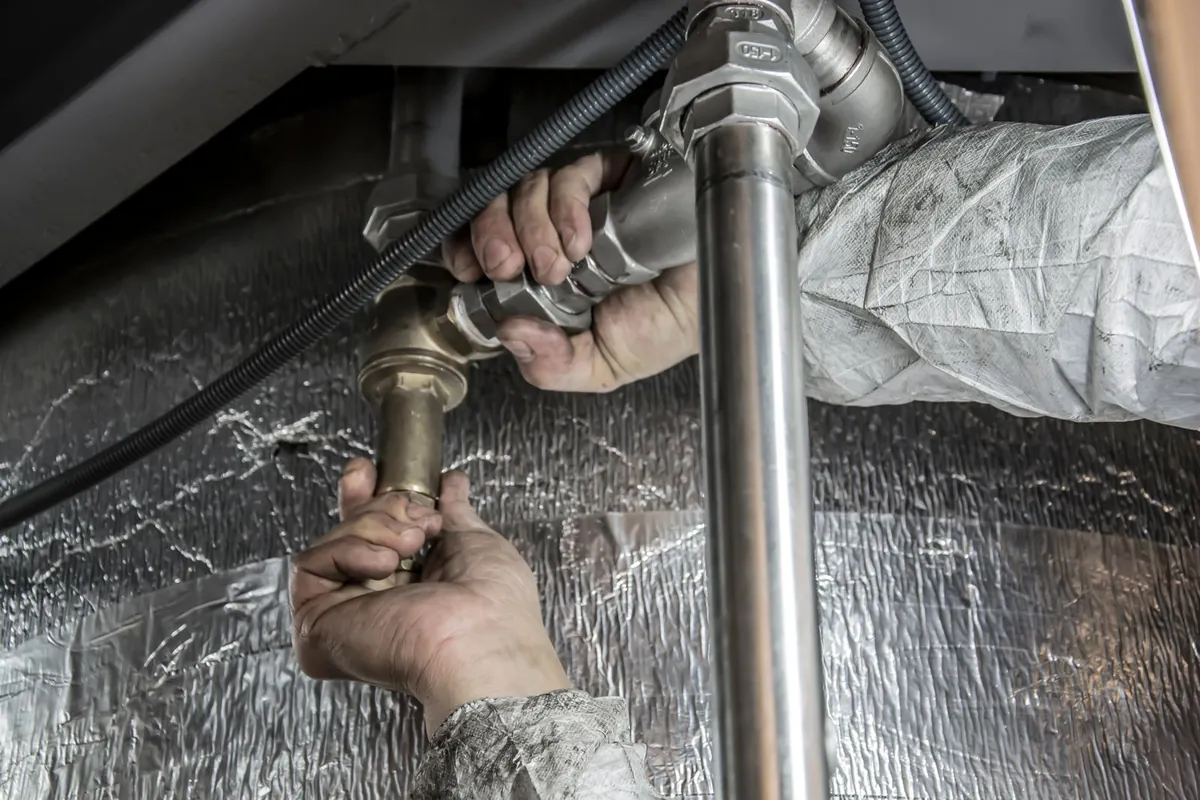
Illustrative photo — pipework exposed and repaired as part of the job; readings are checked against the dry standard during structural drying.
- Measured dryingDaily moisture readings guide every drying decision.
- Written scope firstYou see the itemised scope before work begins.
- Photo recordsPhotos and logs from first visit to final walkthrough.
- Homes and businessesHouses, rentals, offices, shops and restaurants.
The short answer
Structural drying is the controlled removal of moisture from building materials using air movement, dehumidification and heat, guided by daily moisture meter readings. Drying is complete only when readings in wet materials match a dry standard taken from an unaffected area, not when a set number of days has passed or a surface feels dry to the touch.
After standing water is removed, the real risk is the moisture you cannot see. Drywall wicks water upward behind paint, cabinets trap it at toe-kicks, wood flooring cups as it absorbs and releases moisture unevenly, and concrete slabs hold water long after the surface looks dry. Structural drying is the discipline of removing that moisture in a controlled way and proving, with numbers, that it has gone.
The science behind it is psychrometry, in plain words: warm air can hold more water vapour than cool air, so drying works by moving air across wet surfaces to lift moisture into the air, then pulling that moisture out with dehumidifiers before it settles elsewhere. Temperature, humidity and air movement have to be balanced together.
How much of a room is wet sets the scale of the job. Under the ANSI/IICRC S500 classes, Class 1 means less than 5 percent of a room surfaces are wet, Class 2 is 5 to 40 percent, Class 3 is more than 40 percent, and Class 4 is water bound in low-permeance materials such as hardwood, plaster and concrete that need specialist drying.
What's included
- Moisture mapping and dry standard We read every affected material and record a dry standard from a similar unaffected material in the same home. That comparison is the target for the whole job. Without it, dry is just an opinion.
- Air movers and dehumidification Air movers are placed from the moisture map, angled across wet surfaces, and dehumidifiers are sized to the class of loss and the volume of the space. Placement is adjusted as readings change.
- Wall cavity and cabinet drying Where readings show moisture behind drywall or under cabinets, we use the least invasive opening that will actually dry the space — removing baseboards, drilling small vent holes where appropriate, or directing air into toe-kick voids.
- Daily readings and drying log Every visit records meter readings, temperature and humidity, equipment changes and photographs. The daily log is your evidence that drying was measured rather than assumed, and it is the document an insurer or a future buyer will ask for.
Why surfaces that feel dry can still be wet
Paint, tile and laminate all hide moisture well. A wall can feel dry at hand height while the bottom plate and the lower cavity remain wet, because water wicks upward and the gypsum core holds moisture after the paper face dries.
That is why we read materials, not appearances. Pin and pinless meters, checked at the same marked points each day, show whether moisture is falling, holding or moving.
- Wall cavities hold moisture behind a dry-feeling painted surface
- Toe-kicks under cabinets trap water against cabinet bases and subfloor
- Slab moisture rises slowly and can defeat new flooring laid too soon
- Hardwood, plaster and concrete are Class 4 materials that dry slowly by design
- Same-point daily readings show real progress instead of guesswork
Drying in Arizona conditions
Arizona heat helps and hurts at the same time. Warm indoor conditions can support evaporation, but monsoon humidity raises the moisture load in the air, and a home that is closed up and hot between visits can push conditions the wrong way.
Occupied homes also need practical planning: noise, access, pets, and keeping drying contained to the affected area so the rest of the home stays liveable. We set out expected visit times, what equipment will run overnight, and what you should and should not move or switch off.
- Equipment placement follows the moisture map, not a fixed per-room count
- Temperature and humidity are logged alongside moisture readings
- Containment keeps drying focused and the rest of the home usable
- Removal day is decided by verified readings, never by the calendar alone
From first call to dry standard
Moisture map and dry standard
We start by reading all affected materials and an unaffected comparison area, marking test points and recording the dry standard in the log.
Written drying scope
Before equipment runs, you receive a written scope covering what will be dried, any baseboard removal or cavity venting proposed, the equipment to be placed, and the daily reading schedule.
Equipment setup
Air movers, dehumidifiers and any cavity-drying or specialist Class 4 equipment are placed from the map and photographed in position.
Daily monitoring visits
Each visit re-reads the marked points, logs temperature and humidity, repositions or removes individual pieces of equipment as areas verify dry, and photographs progress.
Verification and handover
When every marked point reads at or close to the dry standard, we do a final full-room check, including cavities, toe-kicks and slab points, and close the log.
Most drying jobs take several days, but the readings decide the finish. Small Class 1 losses can verify quickly, while Class 4 materials such as hardwood, plaster and concrete release moisture slowly and take longer. Anyone who guarantees a fixed drying time before taking readings is guessing. Your daily log shows progress and gives an honest expected removal day.
Baseboards and sealed cavities block the airflow drying depends on. Removing a baseboard or adding small vent holes lets dry air reach the wet bottom of the wall, which often dries the cavity without removing the drywall itself. We propose the smallest opening that the readings justify, explain it in the scope, and only enlarge openings if readings prove it necessary.
Please leave drying equipment running unless we agree otherwise. Drying works continuously, and switching equipment off overnight lets humidity rebound and materials reabsorb moisture, which extends the job and creates gaps in the log. If noise or a tripped breaker is a problem, call (855) 981-1210 and we will adjust placement or equipment rather than losing drying time.
We know it is dry when meter readings verify against the dry standard. At the start we record readings from an unaffected area of the same materials, and drying continues until the wet materials return to that range at every marked point, including cavities and slab points. The final readings are logged and photographed, so dry is a documented measurement, not a judgement call.
A stall means something in the plan needs to change. Readings that stop falling usually point to a sealed cavity, a low-permeance Class 4 material, or water still entering from an unresolved source. We investigate, explain what the readings are showing, and revise the written scope — for example opening a cavity or adding specialist equipment — before simply adding more days.
Water where it shouldn't be?
One call tells us what happened, where you are, and what the water touched — and gets the drying started before the damage spreads.
Tell us what happened
Call, or send the form and we'll call you back. If water is still spreading, shut the water off at the main if you can do it safely — then call.
- Phone(855) 981-1210
- Address6900 N 21st Ave, Phoenix, AZ 85015
- Coverage25 Arizona cities — see the service map